Utilize models like OpenAI, Gemini, Anthropic, and Llama to generate intelligent responses, content, and solutions.

Craft effective prompts to maximize model performance and guide outputs for your specific tasks.

Fine-tune or build models for classification, recommendation systems, or other domain-specific applications.
eSense helps organizations identify, develop, and integrate AI solutions that reduce manual effort, improve access to information, and help people make better-informed decisions. From AI strategy and enterprise knowledge search to document intelligence and workflow automation, we connect technical possibilities to your business priorities. Discuss Your AI Opportunity
Your teams hold valuable knowledge across documents, databases, applications, and years of experience. Finding and applying that knowledge can take considerable time. Repetitive tasks and disconnected processes add further cost. We help you identify where AI can make work easier, improve consistency, and create capacity for higher-value activities. AI Strategy & Opportunity Assessment
Identify the business problems worth solving with AI. Evaluate potential value, data readiness, implementation effort, and operating costs to develop a focused roadmap with clear priorities and success measures.
Help employees find relevant information and ask questions across approved business content. Using retrieval-augmented generation, or RAG, we connect language models with your information to produce contextual answers with supporting references.
Make lengthy and unstructured documents easier to use. Explore AI applications for extracting key information, comparing documents, summarizing findings, and preparing material for human review.
Connect information retrieval, analysis, and routine tasks into coordinated workflows. Define what AI can do independently, where people approve actions, and how exceptions reach the right team.

eSense helps organizations identify strategic opportunities for AI, automate key tasks, and align implementations with long-term goals — unlocking real business value through intelligent automation.
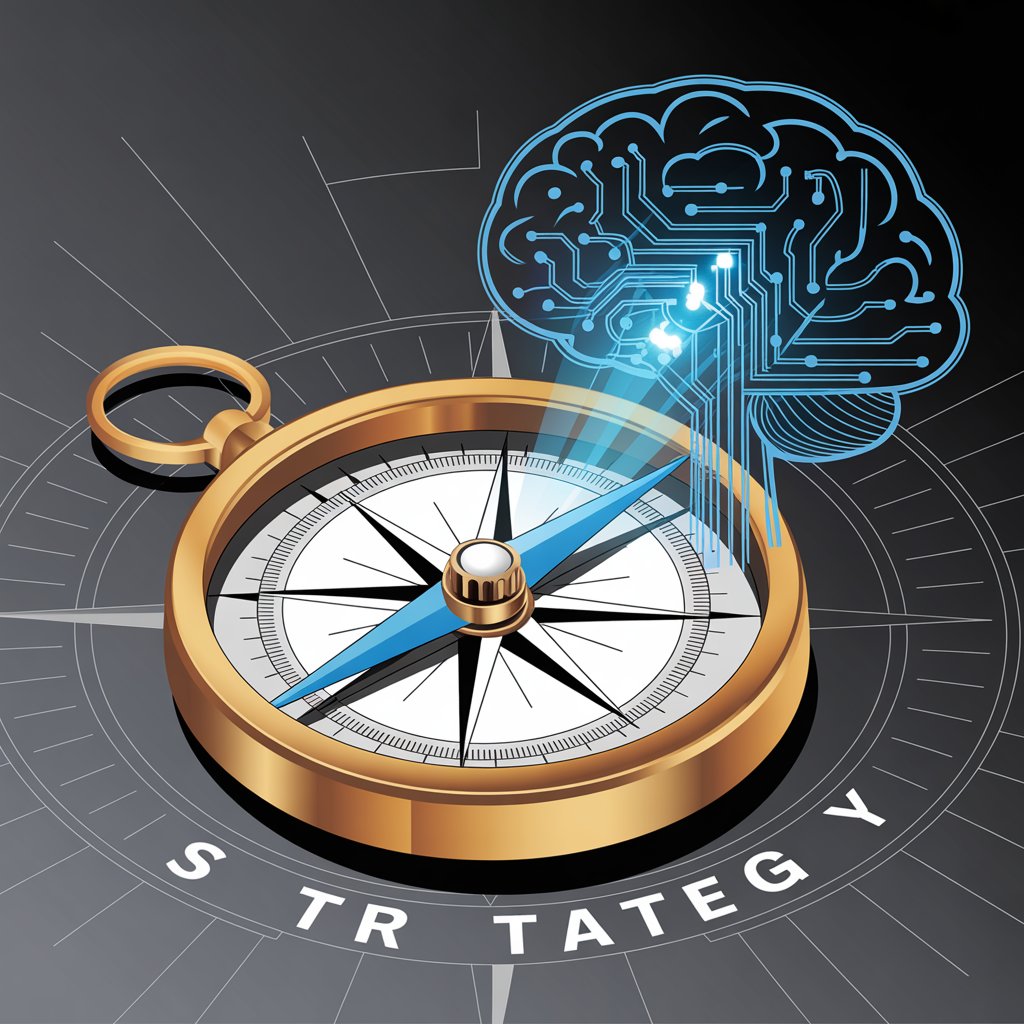
Develop AI assistants and applications around your users, data, and processes. Select models and integration approaches based on the task, balancing response quality, speed, cost, and deployment requirements.
Assess how an AI application performs on representative business tasks. Evaluate answer quality, relevance, unsupported responses, potential bias, response time, and cost—and use the findings to guide improvements.
Potential applications include:
Each opportunity starts with your workflow, available data, and the people who will use the solution.
Our AI initiatives are led by Dr. Srikanta Tirthapura, Chief Artificial Intelligence Officer, whose background spans AI, search, ranking, data systems, academic research, and industry product development. He holds a Ph.D. in Computer Science from Brown University and has experience with organizations including Apple, Microsoft, Oracle, and Bell Labs.
That combination helps connect AI research and engineering to practical business needs.
Successful AI adoption depends on how a solution fits into real work. We work with your team to define approved data sources, access requirements, human review, and evaluation criteria appropriate to the application.
The goal is useful assistance, clear accountability, and results your team can assess.
Bring us a process that takes too much effort, information that is difficult to find, or an AI initiative that needs a clearer path forward.
Let’s explore the opportunity and identify a practical next step.

Various methods including automated tools and using LLMs as evaluators to assess performance.

Use of synthetic datasets to generate scalable, safe, and diverse testing scenarios for evaluation.

Thorough model evaluations to detect bias, ensure fairness, and prioritize safety across applications.
An AI system that ingests your internal data and answers natural language questions with citation-backed answers.

An AI research assistant to help academics and analysts explore research topics efficiently.
 Search & download papers
Find related/cited work
Expand citations & rank papers
Uses citation scraper, download tool, ranking engine
AI in Healthcare
Climate Change
Stock Market Prediction
Search & download papers
Find related/cited work
Expand citations & rank papers
Uses citation scraper, download tool, ranking engine
AI in Healthcare
Climate Change
Stock Market Prediction